%20--%3e%3csvg%20width='10.365639mm'%20height='15.192757mm'%20viewBox='0%200%2010.365638%2015.192757'%20version='1.1'%20id='svg79707'%20inkscape:version='1.4.3%20(1:1.4.3+202512261035+0d15f75042)'%20sodipodi:docname='inreality.svg'%20inkscape:export-filename='student_job_posting_2.pdf'%20inkscape:export-xdpi='96'%20inkscape:export-ydpi='96'%20inkscape:export-batch-path='export'%20inkscape:export-batch-name=''%20xml:space='preserve'%20xmlns:inkscape='http://www.inkscape.org/namespaces/inkscape'%20xmlns:sodipodi='http://sodipodi.sourceforge.net/DTD/sodipodi-0.dtd'%20xmlns:xlink='http://www.w3.org/1999/xlink'%20xmlns='http://www.w3.org/2000/svg'%20xmlns:svg='http://www.w3.org/2000/svg'%3e%3csodipodi:namedview%20id='namedview79709'%20pagecolor='%23ffffff'%20bordercolor='%23666666'%20borderopacity='1.0'%20inkscape:showpageshadow='2'%20inkscape:pageopacity='0.0'%20inkscape:pagecheckerboard='0'%20inkscape:deskcolor='%23d1d1d1'%20inkscape:document-units='mm'%20showgrid='false'%20inkscape:zoom='1.4142136'%20inkscape:cx='4343.7569'%20inkscape:cy='29.344931'%20inkscape:window-width='1920'%20inkscape:window-height='1011'%20inkscape:window-x='0'%20inkscape:window-y='0'%20inkscape:window-maximized='1'%20inkscape:current-layer='layer1'%20showguides='false'%3e%3cinkscape:page%20x='2.6540307e-05'%20y='-7.1358691e-08'%20width='10.365639'%20height='15.192757'%20id='page19'%20margin='0'%20bleed='0'%20inkscape:label='logo'%20/%3e%3c/sodipodi:namedview%3e%3cdefs%20id='defs79704'%3e%3clinearGradient%20id='linearGradient50'%20inkscape:collect='always'%3e%3cstop%20style='stop-color:%23f97316;stop-opacity:1;'%20offset='0.1701287'%20id='stop50'%20/%3e%3cstop%20style='stop-color:%237c3aed;stop-opacity:1;'%20offset='0.60597193'%20id='stop51'%20/%3e%3c/linearGradient%3e%3cradialGradient%20inkscape:collect='always'%20xlink:href='%23linearGradient50'%20id='radialGradient51-6'%20cx='2489.9111'%20cy='159.33452'%20fx='2489.9111'%20fy='159.33452'%20r='5.0509744'%20gradientTransform='matrix(7.6652778e-4,3.0665387,-3.0681044,7.6677597e-4,2963.71,-7477.2732)'%20gradientUnits='userSpaceOnUse'%20/%3e%3c/defs%3e%3cg%20inkscape:label='Layer%201'%20inkscape:groupmode='layer'%20id='layer1'%20transform='translate(-2475.2363,-156.73378)'%3e%3cpath%20id='circle47-7-2'%20style='fill:url(%23radialGradient51-6);stroke:none;stroke-width:2.26177;stroke-linecap:round;stroke-linejoin:round;stroke-dasharray:none'%20d='m%202476.7676,156.85438%20a%201.3994706,1.3994706%200%200%200%20-1.3994,1.3994%201.3994706,1.3994706%200%200%200%201.3994,1.39939%201.3994706,1.3994706%200%200%200%201.3994,-1.39939%201.3994706,1.3994706%200%200%200%20-1.3994,-1.3994%20z%20m%203.8804,5.1e-4%20a%201.240895,1.240895%200%200%200%20-1.2403,1.24024%201.240895,1.240895%200%200%200%201.2403,1.24023%20c%201.7555,0%202.2551,0.95189%202.2613,1.90221%200.01,0.95032%20-0.4555,1.88516%20-2.2613,1.88516%20a%201.2410191,1.2410191%200%200%200%20-1.0744,1.86087%20l%203.5802,6.20117%20a%201.240895,1.240895%200%200%200%201.6949,0.45527%201.240895,1.240895%200%200%200%200.4553,-1.6955%20l%20-2.7207,-4.7129%20c%201.7641,-0.71447%202.8193,-2.3649%202.8086,-4.01164%20-0.014,-2.18341%20-1.8688,-4.36511%20-4.7439,-4.36511%20z%20m%20-3.8804,4.038%20c%20-0.7753,0%20-1.3994,0.62408%20-1.3994,1.3994%20v%208.11372%20c%200,0.77532%200.6241,1.39991%201.3994,1.39991%200.7753,0%201.3994,-0.62459%201.3994,-1.39991%20v%20-8.11372%20c%200,-0.77532%20-0.6241,-1.3994%20-1.3994,-1.3994%20z'%20/%3e%3c/g%3e%3c/svg%3e)
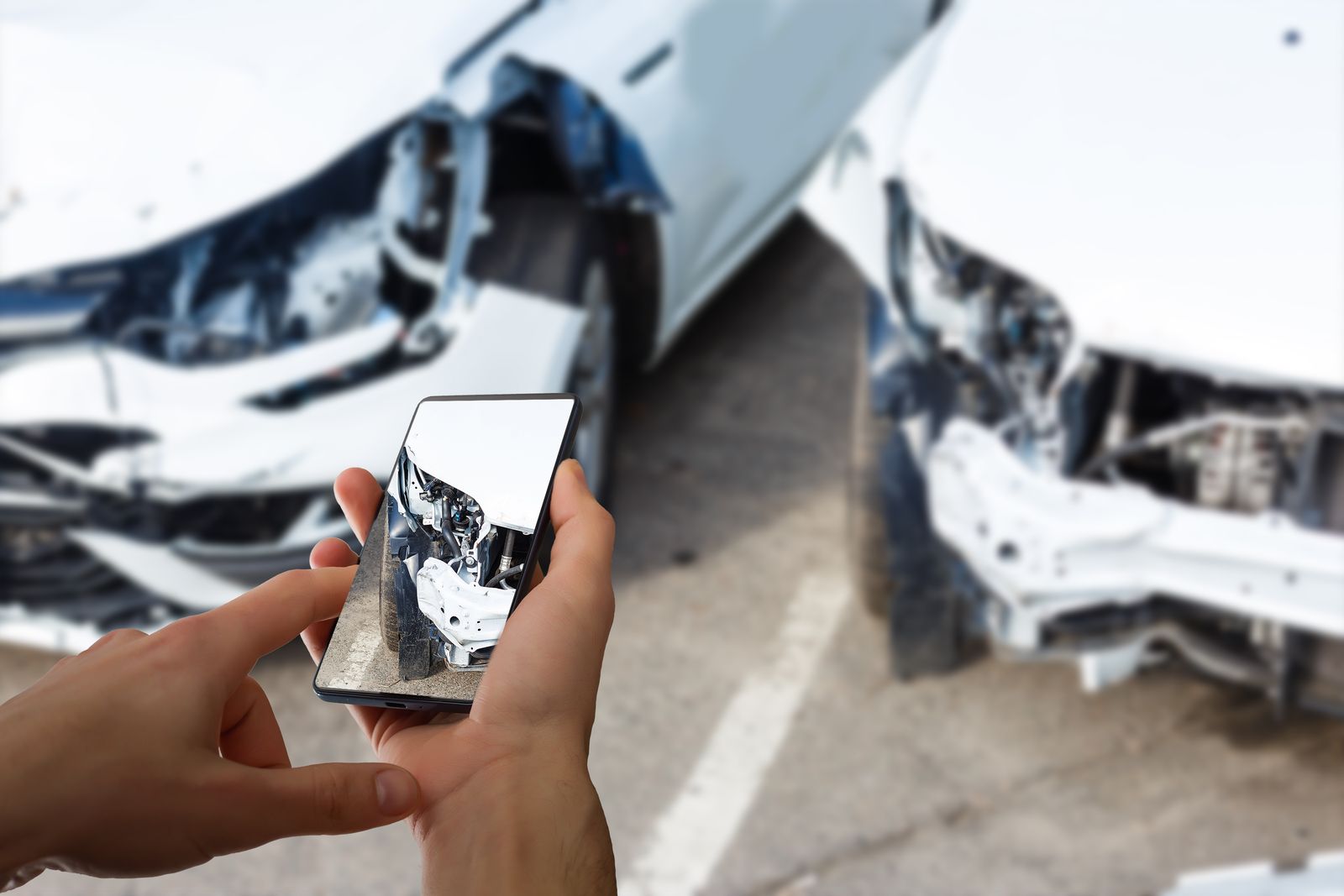
For most of the industry’s history, a photo of a smashed bumper was about as close to ground truth as a claims handler could get. A doctor’s letter was a doctor’s letter. A receipt was a receipt. In 2026, that comfortable assumption has come unstuck. What we see does not necessarily indicate what is real anymore.
Generative AI has made it astonishingly cheap, easy and quick to create convincing imagery, video, audio and documents. A claimant with a smartphone and a free app can now show you damage that never happened, deepen a dent that is barely there, or generate a “doctor’s note” that looks just as convincing as the genuine article. The tools are rapidly getting better, faster and more accessible.
For insurers, this has grown beyond more than a simple inconvenience. It is a fundamental challenge to the evidence focused backbone of underwriting and claims, and it deserves a thoughtful, structural response rather than a patchwork of often inaccurate, after-the-fact detection engines.
So how big is the problem, really?
Looking at the broader fraud figure, the numbers are stark.
- Detected insurance fraud already costs billions. The Association of British Insurers reports that detected fraud in the UK costs the industry over £1 billion every year, with undetected fraud widely thought to be several times that figure.
- Manipulated images are appearing in mainstream lines. Zurich UK warned in 2024 that it was seeing a rapid rise in claims supported by AI-edited photos, particularly in motor and property. UK based insurer, Admiral recorded a 71% rise in fraud during 2025 compared to the previous year, partly blaming the increased use of artificial intelligence software to manipulate evidence. Meanwhile Allianz and LexisNexis Risk Solutions have flagged synthetic identity fraud and AI-generated documents as one of the top emerging threats in claims.
- The trajectory is steep. At a broader level Deloitte’s Center for Financial Services has projected that generative-AI-enabled fraud losses across US financial services could rise to roughly US$40 billion by 2027, up from around US$12 billion in 2023.
A common pattern is emerging beneath these headlines. The most damaging fakes are rarely the most spectacular, sensational ones. They are subtle, often what we refer to as ‘shallowfakes’: a slightly deeper dent, a freshly added scratch, a moved license plate, a phantom puddle of brake fluid. These small edits are precisely the changes that are hard to notice, for both humans and machines.
Why the existing toolkit is straining
So how have we been tackling the issue? Insurers have rightly invested in image forensics, metadata analysis, reverse image search and behavioural analytics. These remain useful. However, they are increasingly playing catch-up given the rate of new tech being released:
- Modern generative models leave fewer of the tell-tale artefacts forensic tools were trained on. In research, the possibility of ‘undetectable AI’ is increasingly being spoken about
- EXIF metadata is easy to strip, spoof or regenerate, meaning that even by going to the base level information, we are still not certain
- Reverse image search struggles with images that simply did not exist before they were generated
- Detection models trained on yesterday’s deepfakes degrade quickly against today’s.
The deeper issue is structural. We allow fraudsters to try any new technological trick available, and then attempt to handle the issue retrospectively - find the fakes in the midst.
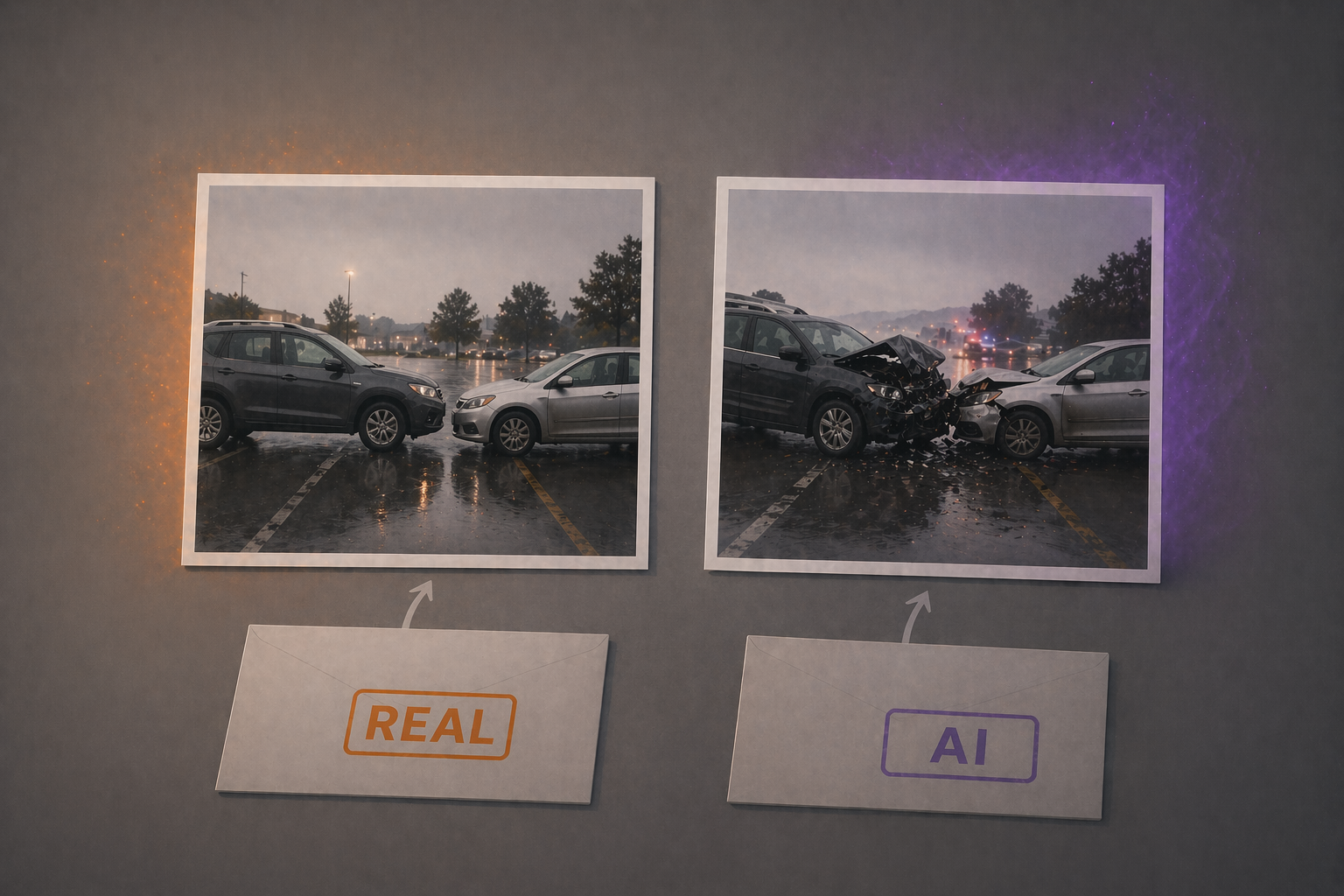
A better question: was it real when it was uploaded?
Rather than chasing fakes after the fact, a growing number of insurers are flipping the question: can we certify that content is authentic at the point it enters our process, and know exactly what has been altered? Can we go back to the source?
This idea is sometimes called content provenance, and it underpins standards such as the Coalition for Content Provenance and Authenticity (C2PA) and the Content Authenticity Initiative, supported by Adobe, Microsoft, the BBC, the New York Times and a growing list of camera and software vendors.
The principle works with existing workflows:
- When a claimant captures a photo or video through a verified capture experience, the device records and stamps key facts about what was taken: when, where, on which device, and with which sensor.
- That stamped “Content Credential” travels with the file. If anyone subsequently edits, crops, filters or AI-enhances the image, the modification is logged against the original.
- A claims handler, or an automated triage system, can immediately see what was originally captured and what (if anything) has been altered. Innocent edits like resizing or rotation can be permitted; suspicious manipulations are flagged for review.
The question quietly shifts from “is this image fake?” to “do we know exactly where this image came from and what has happened to it since?” That is a question insurers can actually answer at scale, today, without rebuilding their claims platforms.
Signing the content: verification beyond the insurer
Certifying content at the point of upload is a great start. The next step is what makes it durable and trusted by all: cryptographically signing the content once it has been received, so its authenticity can be verified independently, by anyone, at any later date. By laying on a cryptographic signature to the ‘Content Credential’ information, we protect it and support the root back to the source being provable. Content is now confirmed and secure from source to viewer.
Why does that matter for insurance specifically?
- Fraud losses drop as the insurer can understand when content is fraudulent at an earlier point, often before it even enters their workflow.
- Loss adjusters, lawyers and reinsurers can confirm authenticity for themselves, without having to take the insurer’s word for it. That is especially valuable in disputed or large-loss claims.
- Customers benefit too, beyond simply less hikes in insurance premiums. A signed photo of pre-existing belongings, vehicle condition or property state is a portable, tamper-evident record they can use long after the policy has lapsed, including with future insurers. Content is secured and can be referenced long into the future.
A signed file is, in effect, a small notarisation of digital truth. Cryptography delivers an objective standard. It does not require everyone to trust any single insurer’s systems. It only requires them to trust the cryptographic system, the same systems which have been ensuring the banking industry has remained secure for decades.
This is exactly what we are building at InReality, take a look at our insurance overview to learn more.
A friendlier, brighter future for digital evidence
None of this is about turning insurers into forensics labs. The aim is the opposite. By capturing authenticity upstream and locking it in with a signature, claims teams are freed to do what they do best: making fair, fast decisions for honest customers, and spending their investigation time on the minority of cases that warrant it.
The threat from AI-generated and manipulated content is real, growing and not going away. But neither is the toolkit for dealing with it. By moving from “detect the fake” to “certify the real,” and by signing content so that its authenticity is verifiable far beyond the four walls of any single insurer, the industry has a credible path to an evidence layer that is genuinely fit for the AI era.
In a world where seeing is no longer believing, knowing where something came from, and being able to prove it, might be the most valuable thing insurance can offer.