
Summary
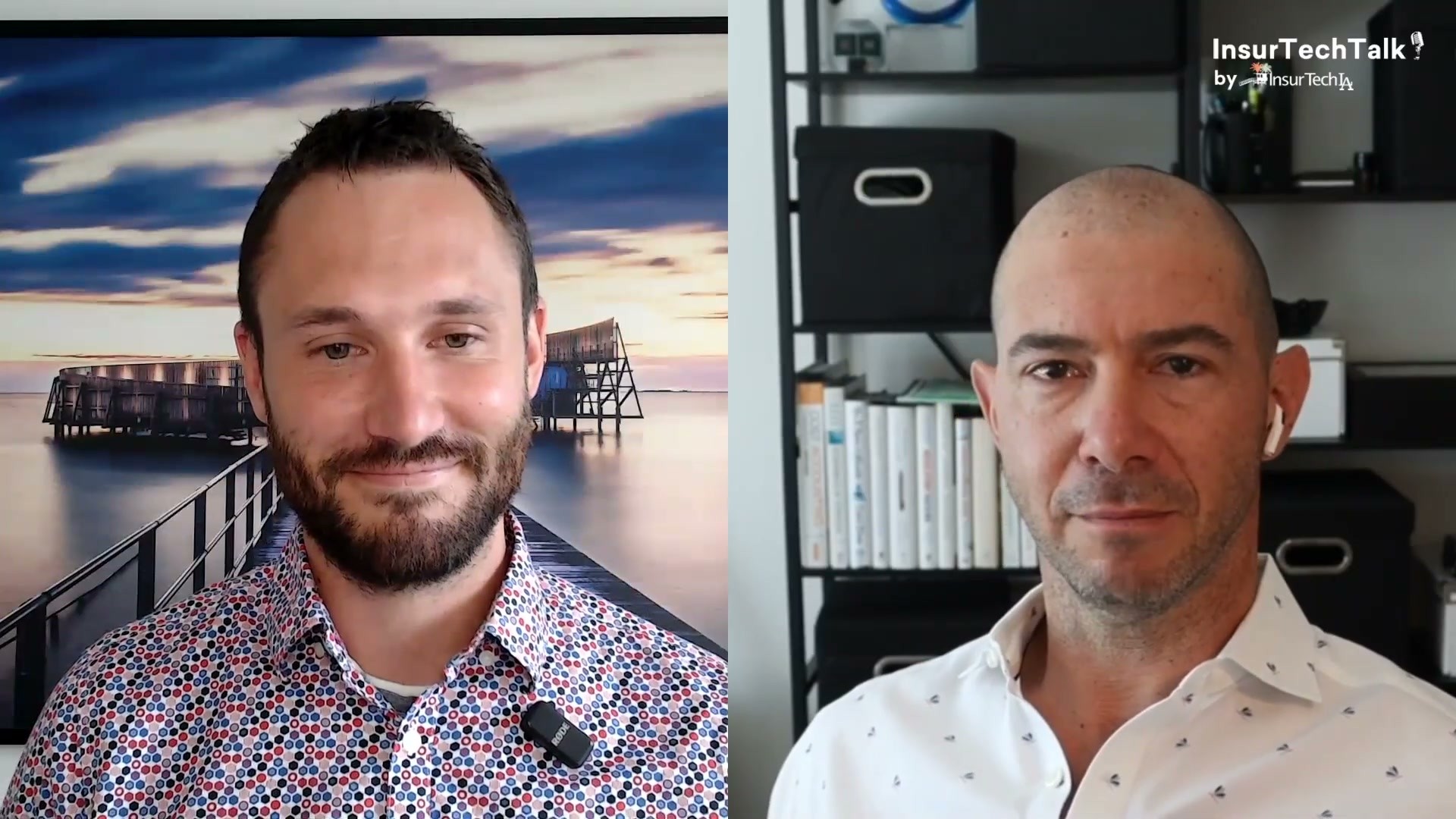
A convincing photo of a damaged car is not, on its own, proof of a valid insurance claim. On episode 167 of InsurTechTalk, published on 11 August 2026, our co-founder and CEO Jeppe Nørregaard joined Gilad Shai to talk about a different starting point: getting trustworthy media at the moment of capture, instead of only trying to detect manipulation after the fact.
The payoff runs both ways: stronger evidence for claims teams, and less friction for honest customers. It doesn’t settle everything, though. Proving where a photo came from is not the same as proving the policy covers the loss.
Watch Jeppe’s conversation with Gilad Shai on YouTube, or open the episode page for the discussion and listening links.
The researcher who changed the question
Jeppe came to content authenticity through research on AI and misinformation. As Gilad’s write-up recounts, the original plan was to use AI to spot misleading claims. The problem was the imbalance: the tools making convincing misinformation kept moving faster than the tools trying to catch it.
For insurance, that imbalance is uncomfortable in a very specific way. A fraudster can keep editing an image until it passes. An insurer has to look at every submission, keep claims moving and avoid treating genuine evidence as suspicious.
So the conversation asks whether we’re solving the wrong problem by making “does this look fake?” the central question.
Three questions behind every claim photo
If “does this look fake?” is the wrong starting point, what should replace it? Take a photo of a broken window submitted with a claim. Studying it for signs of editing cannot establish how the file was created, and even a genuine photo cannot show that the window broke in the circumstances described. These are separate questions, and each needs a different kind of evidence.
Claims decisions rest on several kinds of evidence. Capture assurance strengthens one of those layers; it doesn’t replace the others.
- Detection asks
- Are there signs that this submitted file has been generated or manipulated?
- Capture verification asks
- Can we verify the file’s trusted capture origin and the integrity of its signed record?
- Claims assessment asks
- Does the complete evidence support a covered loss under this policy?
The questions aren’t in competition. Existing fraud checks still earn their keep, especially on older uploads and evidence that never went through signed capture.
Capture, share, verify: a different route through a claim
Jeppe describes a simple sequence in the episode. What makes it work is that the evidence is created early, before the photo ever reaches the claims queue.
- Capture. A customer photographs the damage through a trusted capture experience, which can be built into an insurer’s existing journey. The photo is checked and cryptographically signed at the point of capture.
- Share. The signed photo is shared with the insurer together with its content verification record, so its integrity stays checkable wherever it goes.
- Verify downstream. Claims handlers and anyone who looks at the photo later can examine the available evidence of origin and recorded changes, instead of going by appearance alone.
InReality Capture is built for this capture-first approach. Signing an upload when it arrives is a different thing: it can’t recover a capture history that was never recorded.
Trustworthy media can support a faster claims process. It cannot decide whether a claim should be paid.
With that boundary in place, insurers can feed verified media into their own triage and automation rules, and send anything uncertain or unsupported to a human. Missing proof is a reason to investigate or request more evidence, not proof of fraud.
The surprising point about fraud numbers
The most provocative moment is Jeppe’s warning about detected fraud going down. Gilad’s write-up sets out the reasoning: a falling number could mean detection is missing more cases, not that fewer people are trying it on.
It’s a warning about measurement, not a claim that every decline has the same cause. Fraud detected, fraud attempted and money actually lost are three different numbers, and a move in any one of them needs context.
For claims leaders, the more useful question isn’t “how much did we catch?” but “how confident are we in the evidence we accepted?”
What to take back to your claims team
Start with one customer journey where photos change an outcome. Ask when the evidence is captured, what can happen to it before it is submitted, and which parts of that journey you can verify today. Then look at where signed capture would strengthen the evidence alongside the controls you already have.
The episode also covers cryptography and privacy. The key difference is that cryptographic verification checks signed evidence instead of giving you a probability score for how a photo looks. It is only as strong as the implementation behind it and the capture process in front of it.
Hear the full conversation with Gilad Shai. For the wider insurance context, read AI Content In Insurance Fraud: Seeing Is No Longer Believing, or explore InReality for insurance.
Source
Gilad Shai, InsurTechTalk episode 167: Jeppe Nørregaard, Founder & CEO of InReality, 11 August 2026. This post summarises themes in the published episode write-up and adds InReality’s commentary; it is not a verbatim transcript.
Cover: a side-by-side still from the episode 167 video. Clips: from the interview as shared by Gilad Shai on LinkedIn.
